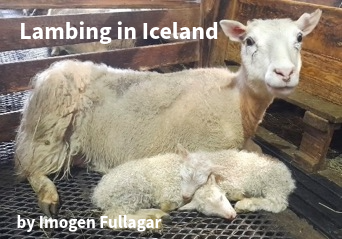
By Imogen Fullagar
I am an over-qualified, under-employed, over-fifty mother, who has recently completed building her own self-contained she-shed on a tiny Tasmanian farm. I need something that is definitively mine to complete it. The plan is to head to Canberra; spend some quality time with Mum; secure a job in the public service, then request ‘my’ position be transferred to the relevant department’s Tasmanian office. A calculated plan based on my history with public service.
Things are not going to plan. I am considered a senior executive by the few who remember me. Vacancies at those levels are rare and internal applicants have critical advantage. No amount of ‘dumbing down and generalising’ seems to disguise strategic intelligence and interest. Managers are neither willing nor able to delegate that sort of work to junior vacancies. Intermediate roles require security clearances, which must be sponsored by an employing department. No job means no clearance, and no clearance significantly limits options.
Six months of looping back on myself pass. I have begged my way into a casual farm job, weeding and harvesting. This serves mental health in the ‘now’, however does not progress towards the financial or Tasmanian end game. Thus, there is internal swearing and an utterly random frustrated burst of ‘it would be easier to find work in Iceland!’.
Suddenly my social media feeds fill with summer job opportunities in Iceland. I have far more experience than the youths these roles target. Plus a novel summer job would reset the Canberra job hunt. Unfortunately, nationality limits me to ninety days in Iceland, and age makes me ineligible. Well … no stone unturned … I’m going to contact the next farmer who posts, present my skills and circumstances, and ask about a ‘board, lodging and allowance’ arrangement instead of an employment contract.
Ooo! The first farming family I contact all but leaps off the screen to grab me. Arnar and Jón are stunning young parents in their late twenties with two pre-schoolers. They need an all-rounder. I offer experience in unsupervised farm work, isolation, and raising a family. They promise not to call me ‘granny’.
Behold! I am now living on a sheep farm in Iceland! Unbeknown to Arnar and Jón, sheep are not my favourite livestock. Sheep eyes are alien, and their behaviour is often as if they have something to prove for being smaller than cattle. Yet Icelandic sheep are unexpectedly interesting. Who knew!? Sheep have been farmed here since 876AD. The Icelandic sheep farming practice is one of free roaming and fencing sheep ‘out’ rather than ‘in’. This means if sheep roam onto private land, the landowner must ensure the wellbeing of the sheep until the farmer reclaims them. Icelandic sheep are a distinct breed with short legs and somehow wombat-like. They have tiny tails which waggle but do not warrant docking, and dual coats of wool (a long coarse outer layer and a fluffy insulating undercoat). Icelandic sheep like the cold, are decidedly independent and defiant, and may or may not have horns. A few of them, known as ‘leadersheep’, have particularly strong herding and protective instincts. These rare beasts are lauded as prized farmer aides, bolstered by epical tales of their serving through storms as a sheepdog might. Meat is the primary purpose of sheep farming; wool has become a bit of a by-product, despite the stunning Icelandic jumpers, and woollen cloth having been the Icelandic currency until the mid-1500s.
Such details all affect the sheep farming culture of Iceland. However, the dominant influence on their management is, of course, the seasons around which it must cycle.
At the end of spring, when lambing has concluded, the sheep are released for the summer to free roam. Farmers then set to using the endless days to grow and harvest as much hay and silage as possible for the next winter. The incredible flavour of Icelandic lamb comes from their grazing, as if wild, across the heathlands and highlands. My decades of commitment to vegetarianism are no defence against their deliciousness, not even though these sheep controversially prevent trees in the landscape from growing any height. Ewes usually take their lambs to where the ewe herself was raised. This means there are usually three sheep within a cooee of each other, even in – landscapes so wild and remote as to seem completely at odds with domesticated stock. This sparse distribution of a small tough breed aligns with the small pockets of shelter afforded by heath and tussock.
And so summer passes.
Early autumn—September—is time for national sheep sorting. Families, friends, communities, volunteers, tourists, Icelandic horses, vehicles, and sheepdogs all work together to scour the cooling landscape and bring the sheep in from the highlands and surrounding country. This takes several days, concluding with a celebration of dinner and dance. The sorting pens are round wooden or stone structures, about fifty metres in diameter, with an open central core created by gated segment pens representing each local farm. The sheep are herded into the centre and sorted into the surrounding pens according to the farm indicated by their ear clipping or tag. Male Icelandic lambs mature at five to six months, so October is also the month in which lambs are sent to slaughter before breeding stock are joined.
Then the long dark winter arrives. Breeding stock are barned and fed the hay stored in adjacent hay barns or as bales. Barning intensity has traditionally favoured small, diverse farms, although these days an Icelandic farmer must have a set number of sheep – something like 350 ewes – to qualify as a producer for taxation benefits and subsidies. At the end of winter, the fleece of ewes is marked according to how many lambs they are gestating. Twins are the norm, with an equal few carrying either one lamb or three. Icelandic ewes have two teats, so the practice is to foster such that every ewe feeds and raises two lambs.
Spring arrives, and lambs start being born. The barn intensity favours a fortnight of intense midwifery whereby ewes are separated, observed and assisted through their lambing. Ewes are stalled alone with their lambs for several days, during which time the lambs are marked by ear cutting and tagging. Stalling feels particularly important for Icelandic sheep because their flocking instinct is weak. The lambs are not docked or ringed.
Icelandic lambing experiences and fostering techniques greatly impress me. Household health and rostering typically has me working alone or with Jón.
The first lambing beyond my abilities is one where I am unable to shift a lamb that is stuck in a yearling’s pelvis. It will not come out, nor can I get it back in to reposition. I call for aid. Jón arrives and tries without success, eventually asking me to hold the ewe on her head so he can work with gravity. This proves absolutely exhausting for the ewe, lamb, and both humans. Finally, the lamb is back inside with its position adjusted so its knees do not have to slide past its head at the tightest part of the pelvis. A very tight birth follows, during which Jón explains to me that this scenario is why they reduce yearling feed once lambing started … the lambs get too big for the yearlings. That night Jón spends two hours alone wrestling with another tight birth. The birth takes so long and is so traumatic that he appears in the barn at midday assuming the lamb died. He is delighted to find it leaping about without a care in the world. I do feel sorry for the mumma ewes. They haven’t been slaughtered, so there is that.
Then the twin delivery via a second year ewe.
There is nothing obviously wrong, but the birthing delay feels off, so I ask Jón to guide me through it. I feel around inside the ewe and find a lamb head and some legs. I am unsure they are of the same beastie, so defer to Jón.
Ah! The joy of watching experienced husbandry!
‘Lamb soup,’ he declares.
I soothe the ewe and whisper to her what a good sheep and Mumma she is, and hold her while watching Jón’s face – his eyes are on the corner of the sheep house but faraway while his mind is with his hand, figuring out what is going on, untangling, rearranging. Then we move to get first lamb out. It’s too tight. It is simply too tight.
Time goes by, but it will not come.
Finally, the birthing wire is requested.
I fetch it, and Jón is once more operating by feel inside the poor ewe. Slowly now, slowly … I am so involved as to be breathing and aching with the ewe. Which is irritating as all hell, but I can’t seem to help it. The lamb is so big, the ewe is tired, yet now surely and finally out the babby comes, to all of our delight and relief.
Jón then takes time, even without my asking, to ensure I see how he used the wire and why. The ewe takes over her lamb and Jón looks to go, but then I ask if we ought to remove the second lamb given the circumstances.
Jón reflects, then nods. Back in he goes, and a couple of minutes later a second lamb.
It looks fine to me as I finally go for the yoghurt and antiseptic that we use for the newborns. Jón sees something I don’t. He holds the lamb in the air upside-down … the lamb wriggles. He splashes it with cold water … lamb wriggles. Puts it on the ground … lamb coughs. Now he’s clearing its mouth, nose and throat, rubbing and slapping it.
‘Grab the whiskey’.
So I do, then wordlessly pour a couple of millilitres into the lid and hand it to him. Jón confidently pours this in the lamb’s mouth. The lamb wriggles.
What is Jón seeing that I’m not?
‘Something’s not right,’ he says.
And yes … now that he’s not agitating it, I can see: the lamb’s eyes just don’t care. For the next fifteen minutes Jón administers life support to the wee thing, willing it to live … willing it to live … willing it to live. He does this with a natural calm dedication, not once irritated by his little boys who are whinging nor my useless curiosity.
He is beautiful. Care steams off this young farmer, and his unspoken commitment is clear. He will not give up unless there is no hope. Something personal drives him that I do not understand.
Minutes tick by. Once more I am so stupidly engaged it affects how I breathe. Utterly useless, but there it is: I am breathing useless hope and belief with all my heart, as is
More minutes pass.
Jón does not falter. But finally the lamb simply has nothing left to give. It is gone.
Jón’s shoulders slump, but he picks it up defiantly.
‘Grab a triplet, we will foster’.
While his young sons entertain themselves by putting a disposable nappy on the foster lamb, Jón washes the dead lamb in a small trough with about a litre of water. He does this quickly and honourably, with gentle efficiency. Then he rescues the foster lamb and washes it very thoroughly with clean warm water.
‘Can you bring two goose eggs?’
I quickly oblige. The little boys are bored, throwing hay and toys into the proceedings, but I want to watch. Jón is unperturbed. He somehow has all of us covered. He’s got this. I could not manage this chaos. He works calmly and patiently, with clear purpose and confident ownership of the circumstances.
Now he washes the foster lamb in the dead lamb’s water. Then we crack the eggs, pouring the yolks and whites onto the lamb’s back. The little boys proceed to enthusiastically rub the eggs all over the bewildered lamb.
By now about half an hour has passed since the ewe’s first-borne, with which she is preoccupied. I’m thinking we missed the fostering window long ago. The best time to foster is to a lambing ewe just before her lamb is born, as this is when the mothering hormones are at their peak and there is no genetic lamb competing for attention.
Jón takes the foster lamb to the ewe. He rubs its mouth and backside with the tail end of the ewe’s birthing fluids, then gives it to the ewe. She licks it a bit, then goes back to her genetic babe. Jón moves the three of them into a small stall. We stand back and quietly watch. After a few minutes she nuzzles the foster lamb and does that lovely mother ewe purr as she licks it clean. As we rinse off, she is letting both lambs feed.
Jón and I each hoist a boy onto our shoulders, and head for the house.
Weeks later, it is my last night at the farm. Arnar and I are up late into the night, savouring the strange confidence of people from opposite ends of the world who cannot be forever part of each other’s lives, yet recognise something of kin in the other.
I reflect how kind Jón is. He works twenty hours most days, across all manner of jobs. He often has at least one preschooler in tow. He must be exhausted. Yet there has not been a single short word from him in the months I have lived in their home. Arnar is his match. She holds her own and does not falter. They are incredible to me and very dear.
After some silence, Arnar quietly shares what shapes Jón. It is serial tragedy beyond any fiction, against which he throws the defence of pleasure and delight in living every waking second. The insight more than justifies every possible respect for this young couple. I will hold their privacy; suffice to say I suddenly understand. This, right here right now, is the essential quality of Iceland. Not the island’s glaciers or volcanoes or hot springs or landscapes that the tourists rush for, but these beautiful, defiantly resilient, every-day people who will live here, committed to making the best of each moment, no matter what.
I feel turned inside out, bizarrely exposed. The extremes of grief and joy are so perfectly balanced and ‘whole’. Perhaps only people from harsh remote islands will understand the intensity which isolation adds to this, but I think others will too: those who know what it is to serve life no matter what the odds; those who know every foothold of hope is precious for navigating cliffs of despair.
…
Now I am back in Canberra. Somehow my certainty of self feels more securely anchored, though who knows why.
Everyone is keen to see photos of lava and glaciers and cliffs and storms. How do I explain that those things are not what matters of Iceland?