By Louise Sapphira
Anne Casey explores the harsh reality that the next generation from the Great Irish Famine experienced by bringing a sense of justice to the voices preserved in archives all this time.
History is full of hidden tales that will open our minds to the reality of sharing this world. This includes the brutal treatment of the vulnerable, and those with power only attempt to hide this truth until the history books are opened. It is within this reality that we can only learn and build from tragedies. Anne Casey explores the idea that history repeats itself in her sixth poetry collection, Seang (Hungering). Seang, a title written in Anne’s native Irish tongue, translates into English as ‘Hungering’. Through her detailed research, Anne has discovered the often-traumatic experiences of girls and women who migrated to Australia during the Great Irish Famine from 1845 to 1849. When reading the poetry collection, you feel the authenticity of Anne’s tone along with the heartbreak of the girls’ and women’s stories. During our discussion, Anne shared her journey of writing this poetry collection and how she brought life to these devastating stories.
The poetry collection is based on Anne’s doctoral research on the impact of the Great Irish Famine. When speaking about the inherent inspiration behind the book, Anne says,
‘I wanted to give voice to these refugee women and children who were silenced over and over during their lives, and who suffered destitution, discrimination, and intergenerational incarceration and hardships, which were largely driven by colonial policies, attitudes, and actions, both in Ireland and then in Australia.’
Anne speaks about the heart of the book, which focuses on these girls who rebelled against being incarcerated in Newcastle Industrial School in New South Wales. She says, ‘They live with me, these uneasy ghosts…There is my hope that my readers acknowledge that these stories don’t end here.’ She continues, ‘Because history repeats and repeats and I would love if these girls’ stories could serve as a beacon for the four hundred and seventy-three million children impacted by conflict and extreme food insecurity in our world today.’
Our discussion led to the life of Eliza O’Brien, a central focus in Anne’s work. She says, ‘You have to have your favourites, and Eliza’s story just profoundly impacted me.’ Eliza found herself living on the streets as a young child, and, as a teenager, ended up in an industrial school. Through these stories in Seang (Hungering), the reader gains insight into something else Anne was trying to achieve. That is how oppressive policies and institutions dictated the girls’ journey, and they fell into such devastating circumstances.
Anne wrote about her own family history within the pages of this book. British soldiers burned her ancestral home to the ground in 1920 when her grandfather was thirteen years of age. She says further, ‘My family escaped with their lives by running off through the fields…but our neighbours who ran out the front door were shot dead.’ Anne adds, ‘So I grew up in that rebuilt house in this tiny little town in the far west of Ireland, surrounded by all these ghosts and stories, so it is any wonder I wrote this.’
When involved in an art exhibition commemorating the 150th anniversary of Newcastle Industrial School for Girls, Anne’s archival research began, and she discovered a pattern during this research that resulted in this poetry collection being brought to life. Anne kept coming across Irish names and asked herself why she saw so many. ‘I looked deeper and found that almost one-third of the inmates were from Irish families who had travelled to Australia in famine-affected years.’ She adds, ‘That told me not only that there’d been this wave of children who had either left Ireland all because of the famine or their parents had, but also, they didn’t manage to escape poverty by coming to Australia.’ Anne continues, ‘The majority of the inmates at Newcastle Industrial School were sent there under court order – they’d either been arrested for vagrancy, prostitution, or some petty crime, all of which indicate that they were struggling. They weren’t choosing to live like that.’ Furthermore, ‘In the New South Wales State Archives, I found letters which were sent to the school authorities by the parents of the girls; there were many parents who were trying to get their children back, and the authorities were refusing to send them back.’ The brutalities these young girls experienced as inmates at the school included being dragged by the hair or locked in solitary confinement on restricted bread and water rations. Verbal abuse and humiliation were also common.
Anne speaks about how the girls resisted this brutal treatment. She says, ‘Not surprisingly, particularly given they were Irish, the more spirited girls rebelled.’ She adds, ‘My lovely Eliza O’Brien, whom I mentioned earlier, was one of the ringleaders who started these escape attempts.’ Anne explains, ‘They were seen as being riotous and disturbing the peace, and eventually they made the national headlines.’ The punishment for this rebellion was being sent to adult jails and experiencing even harsher treatment. The scandal they created, including making the national headlines, forced the school to close in 1871. ‘But it was from the frying pan into the fire, because the poor girls were transferred to Cockatoo Island in Sydney Harbour to another institution, and the punishments were even more violent there; and they used strait-jackets and shaved their hair.’
Alongside sharing the voices of the girls and women, the poetry collection also investigates the impact of climate, politics, and economics within the context of the Great Irish Famine. To provide some background to the famine, Anne says, ‘The British landlords continued to ship food supplies out of Ireland, while over a million people starved, and another million and a quarter left the country in desperation.’ She adds, ‘In any major crisis like that, the first victims are always women and children…and that was certainly the case in the Great Irish Famine, as it is in many parts of the world today.’ She draws the discussion to the end of the book, which highlights the impact on the vulnerable and that children are still suffering today for the same reasons. She continues, ‘It’s still climate, which is causing mass migration, destitution, and starvation. It’s politics, we all know the countries where that’s happening right now, and it’s economics. It’s because of greed.’
The story of Catherine Rudd (née McNeill) is another narrative that grabs the hearts of Anne’s readership. Anne spoke about the events after the death of Catherine’s husband, Thomas Rudd, in 1867, when she had six children to look after. On the 1st of September in 1868, the following year after Rudd’s death, Anne describes that the Sydney Morning Herald reported her arrest in Kuma Market Square with her daughter, who was also called Catherine. Anne says, ‘The police went to the campsite where Catherine was living with her children, which was described in the police report as a miserably constructed shelter composed of rags and boughs.’ This is where the name of the poem Rags and Boughs originated from. Anne adds, ‘The children were charged with living and wandering in the company of their mother, Catherine Rudd, a vagrant and reputed prostitute.’ Anne explains, when you consider Catherine’s story together with her children, ‘It’s beyond doubt that, like so many destitute women at that time, and even in this present day, Catherine had made the pragmatic decision to sell her body to feed her children.’ Anne says, ‘She went to Goulburn Jail for three months, and her children were taken away, and of course she was never told where they went. It’s very unlikely she was ever reunited with any of her children, and she died in 1874 at the age of forty-one.’
Here is the section of the ending of the poem Rags and Boughs:
This is the bed that Catherine made
under the boughs where the strangers paid
for the choice she’d made for her children’s sake–
the choice-that-was-no-choice she’d had to make.
Drawing on Anne’s journey as a writer, she says, ‘I was completely surrounded by poetry from the moment I was born. My dad and other members of the family would recite poetry as a normal part of conversation…I was immersed in it at school as well.’ She explains, ‘Poetry’s always been very prevalent in Irish society.’ From Anne’s first poem as an eight-year-old that was about spiders, she says, ‘In all the years since then, I’ve also been seduced by poetry’s potency in capturing hearts too.’ She speaks about one of her influences, Eavan Boland, an Irish feminist poet who is a hero of hers. The poem Sleep, Child in this poetry collection is based on text fragments from seventeen of Eavan Boland’s poems. When reflecting on poetry and storytelling and the value in the current world, Anne says, ‘I think poetry and literature, in fact, all art has a vital role to play in acting as an archive of who we are, and how we have lived.’ She adds, ‘It forces us to confront questions of whether this is who we want to be and how we want to be remembered.’
When Anne finishes the launch of Seang (Hungering) in Ireland and Australia, there is an array of content from her doctoral work on this collection of poetry that could potentially be published. However, ‘Other poems are happening that have nothing to do with this book or this history.’ She adds, ‘They’re about the things that go around in my head and heart all the time, my family, my world, ecopoetry, and preserving cultural memory’. Alongside that, she teaches creative writing at the University of Technology in Sydney. But in the meantime, Anne’s audience will discover the next generation of stories from the Great Irish Famine and why their lives often ended too soon, with their voices taken to the grave. But through the narrative in Seang (Hungering), there is a sense of the uprising of their pain, including the strength and courage of the girls and women.
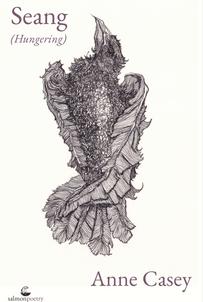
Originally from Ireland and living in Australia for three decades, Dr Anne Casey is the author of six poetry collections. Her most recent book, Seang (Hungering), was commended by the President of Ireland, Michael D. Higgins as “an important contribution to a vital conversation on hunger, migration and displacement”. Anne’s work is widely published and awarded internationally, ranking in The Irish Times’ Most Read. Her awards include the American Writers Review Prize, AAALS Poetry Prize, Henry Lawson Poetry Prize and iWoman Global Award for Literature. Anne holds a PhD in archival poetry and poetics of resistance from the University of Technology Sydney where she researches and teaches creative writing.
Website: anne-casey.com
Social media: @1annecasey